Frequent Headaches: Proper Assessment, Red Flags, and When Tests Help

Most recurrent headaches are primary headache disorders, especially migraine or tension-type headache, rather than signs of anaemia, blood-pressure changes, or glucose abnormalities. According to the American Headache Society, roughly 80%–90% of headaches are primary, so testing should be guided by the history, examination, medicines, and associated symptoms instead of being treated as a standard headache panel.
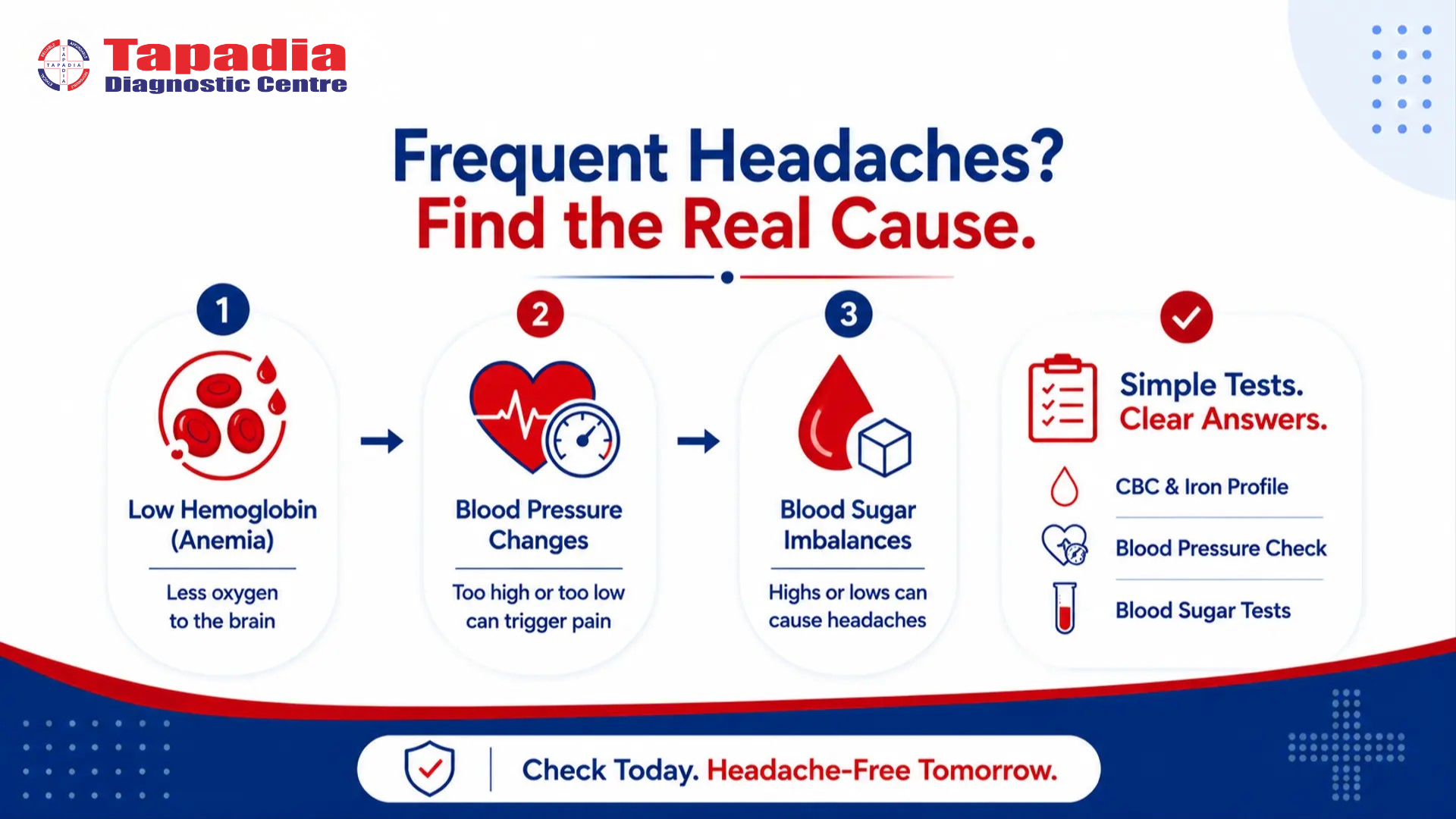
If headaches keep coming back, the next step is not always a fixed set of tests. Frequent use of pain-relief medicines can itself contribute to medication-overuse headache, and the right work-up depends on the headache pattern, triggers, medicines, sleep, stress, blood loss history, and associated symptoms.
Start with proper headache assessment
A careful headache assessment usually comes before any testing. The aim is to decide whether the pattern fits a primary headache disorder such as migraine or tension-type headache, or whether there are features that suggest a secondary cause that needs targeted investigation.
How often the headaches happen, how long they last, and whether the pattern is new or changing
Where the pain is felt, how severe it is, and whether it throbs, presses, or worsens with activity
Associated symptoms such as nausea, vomiting, light sensitivity, sound sensitivity, aura, fever, weakness, or visual change
Medicine use, including frequent pain-relief tablets, caffeine intake, and glucose-lowering medicines
Sleep, hydration, stress, posture, recent illness, pregnancy status, and past medical history
Blood tests can sometimes identify contributing abnormalities, but they do not quickly pinpoint the exact physical cause of most recurrent headaches. Likewise, correcting an abnormal result does not guarantee that the headaches will stop.
When anaemia-related testing may help
A CBC and ferritin may be appropriate when headache occurs along with pallor, fatigue, breathlessness, heavy menstrual bleeding, possible gastrointestinal blood loss, dietary risk, or other signs that make anaemia more likely. In that setting, testing can help show whether low haemoglobin or iron deficiency may be contributing to symptoms.
Headache alone does not establish anaemia. Anaemia is one possible contributor in selected patients, not the usual explanation for recurrent headaches.
Blood pressure and headache: when it matters
Mild or moderate hypertension usually causes no symptoms, and headache alone is not a reliable indicator of high blood pressure. Headache becomes more concerning when blood pressure is severely elevated and there are signs of acute organ injury or other urgent symptoms.
If a reading is above 180/120 mm Hg, repeat it after at least one minute. Emergency care is needed when it remains this high and is accompanied by chest pain, breathlessness, weakness, numbness, vision change, or difficulty speaking.
Low blood pressure should also be assessed carefully. Orthostatic hypotension can cause light-headedness, faintness, blurred vision, and sometimes headache, but it should be checked with correctly performed seated or lying and standing measurements rather than general home monitoring alone.
Blood sugar testing: use it selectively
Blood sugar testing is most useful when the history suggests diabetes, glucose-lowering medicine use, or symptoms that make glucose disturbance more likely. It should not be presented as a routine test for every person with recurrent headaches.
True hypoglycaemia is most common in people using glucose-lowering medicines. In people without diabetes, it is uncommon and usually needs documented low glucose during symptoms. Headache, sweating, shaking, hunger, and confusion can occur, but symptoms alone do not establish hypoglycaemia.
Chronic severe hyperglycaemia may cause symptoms such as dehydration, but headache is not a reliable sign of prediabetes. HbA1c and fasting glucose may be reasonable when diabetes risk or relevant symptoms exist, not as a standard test for every recurrent headache.
Other tests should be symptom-directed
Additional testing should follow clinical suspicion rather than being ordered as a general headache package. The most helpful tests are the ones that match the history and examination.
Thyroid testing: Hypothyroidism may sometimes be associated with headache, but routine thyroid panels are not justified for everyone. When thyroid disease is suspected, TSH is usually the initial test, with free T4 added when indicated.
Electrolytes and hydration: Electrolyte abnormalities or dehydration may matter in selected patients, especially when there is vomiting, diarrhoea, poor intake, heat exposure, or medicine-related fluid loss.
Inflammatory markers: hs-CRP is not a standard general test for frequent headaches. CRP or ESR may be useful in selected cases, such as a new headache after age 50 with features that raise concern for giant-cell arteritis.
Dehydration can trigger or worsen headache in some people, although the exact mechanism is not fully understood.
If your clinician recommends testing, the clearest approach is to order only the tests that fit your symptoms, examination findings, and medical history.
When to seek immediate medical attention
Most recurrent headaches are not emergencies, but certain red flags need urgent medical assessment.
A sudden, extremely severe headache that reaches maximum intensity quickly.
Headache with weakness, numbness, confusion, slurred speech, or other new neurological symptoms.
Headache with fever, neck stiffness, repeated vomiting, altered consciousness, seizure, or vision loss.
Headache that starts after a head injury.
A new or clearly changed headache after age 50.
Progressively worsening headaches over time.
Headache triggered by coughing, straining, or exertion.
A new headache during pregnancy or postpartum.
Headache in someone with cancer or significant immune suppression.
Key takeaways: what to remember
Recurrent headaches deserve proper assessment: Most are primary disorders such as migraine or tension-type headache, not hidden blood abnormalities.
Testing should be targeted: CBC, ferritin, blood pressure readings, glucose testing, thyroid testing, and inflammatory markers are useful only when the history and examination support them.
Avoid absolute conclusions: Abnormal test results may reveal contributing problems, but they do not automatically explain every headache or guarantee that treatment will stop the pain.
Know the red flags: Sudden severe headache, neurological symptoms, fever with neck stiffness, repeated vomiting, seizure, vision loss, pregnancy-related new headache, and major pattern change all need prompt attention.
Frequently asked questions (FAQs)
Dehydration can trigger or worsen headache in some people, although the exact mechanism is not fully understood. It is one possible factor, not a complete explanation for every recurrent headache.
You cannot tell from pain alone. Anaemia and blood-pressure problems should be considered only when the history, examination, and associated symptoms make them likely, and testing should be chosen accordingly.
That pattern can make glucose testing more relevant, especially if you use glucose-lowering medicines or have symptoms such as sweating, shaking, hunger, or confusion. In people without diabetes, true hypoglycaemia is uncommon and usually needs documented low glucose during symptoms.
There is no single standard panel for frequent headaches. Tests such as CBC, ferritin, blood pressure measurement, glucose testing, thyroid testing, CRP, or ESR are chosen according to the individual clinical assessment.
No. Many people with mild or moderate hypertension have no symptoms at all. Headache becomes more concerning when the reading is severely elevated or when urgent warning signs are present.
Disclaimer: This content is for informational and educational purposes only. Tests should be ordered according to an individual clinical assessment and this article does not replace professional medical advice, diagnosis, or treatment.

We also provide Home diagnostic services