Low Vitamin B12 Blood Test Guide: Symptoms, Causes, and Diagnosis

Low vitamin B12 levels can affect your energy, brain function, and nervous system. The symptoms, such as tiredness, brain fog, and tingling in your hands or feet, often develop gradually, so they can be easy to overlook. A simple blood test can detect a vitamin B12 deficiency early, helping you get the right treatment through dietary changes, oral replacements, or injections, depending on the cause and severity.
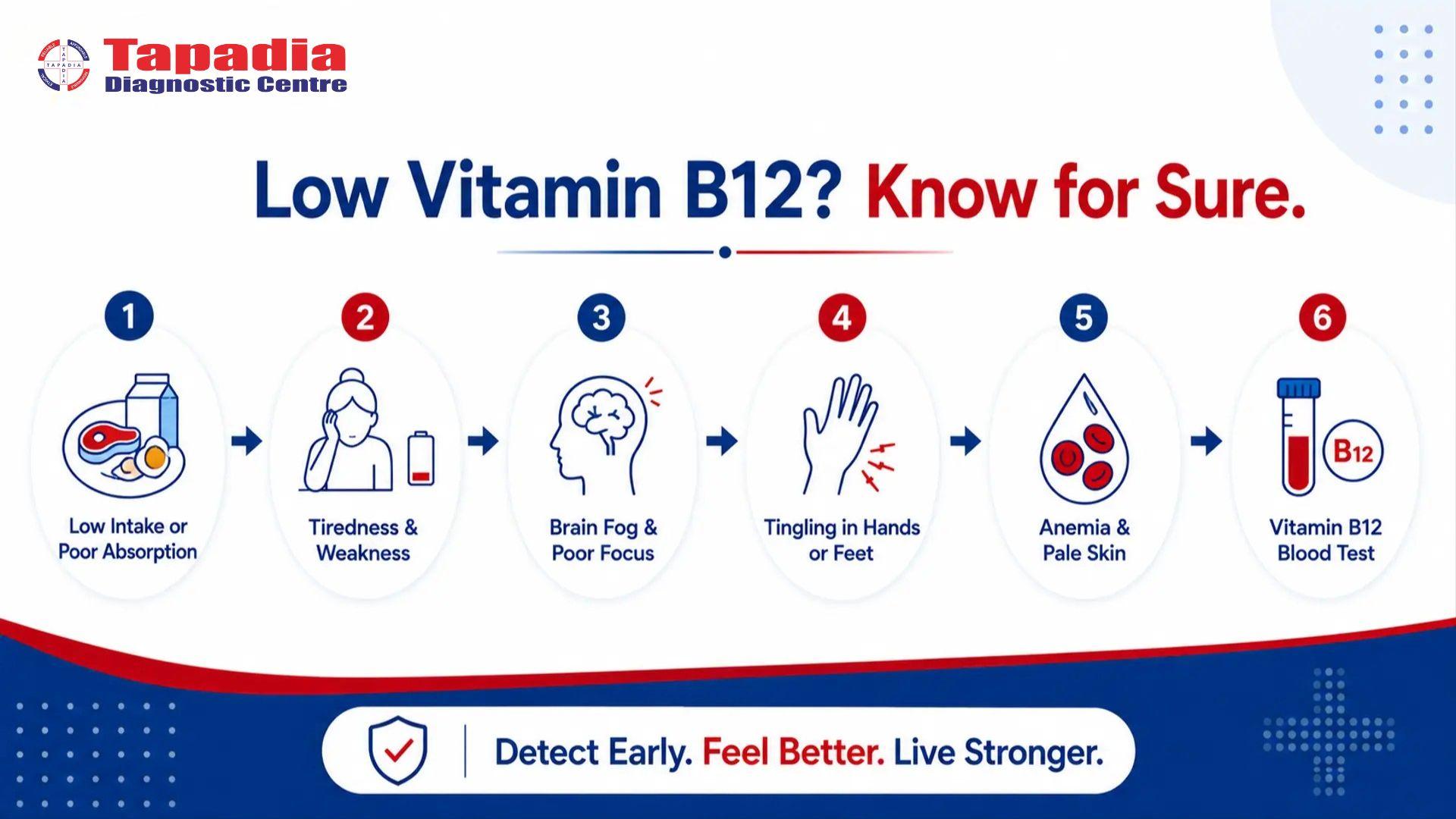
If you often feel tired, weak, or notice tingling in your hands or feet, low vitamin B12 could be one reason. These symptoms are easy to blame on stress or poor sleep, but a blood test can help find the cause.
Vitamin B12 is a nutrient your body needs but cannot make on its own. You get it from food or supplements. When levels drop, your blood cells, nerves, and brain may not work as they should.
What Is Vitamin B12 and Why Is It Essential?
Vitamin B12, also called cobalamin, helps your body do several important jobs:
Red Blood Cell Production: It works hand-in-hand with folate and iron to manufacture healthy red blood cells that prevent anemia.
Nerve Maintenance: B12 helps build and maintain the protective fatty sheath (myelin) that insulates your nerve fibers, ensuring smooth communication between your brain and body.
DNA Synthesis: It is required for cellular replication and energy metabolism across every tissue in your body.
This is why low B12 may cause both blood-related symptoms, such as anemia and tiredness, and nerve-related symptoms, such as numbness, tingling, or balance problems.
Common Symptoms of Low Vitamin B12
Low vitamin B12 can cause many different symptoms. Some signs look like other common health problems, which is why deficiency is easy to miss:
Profound Fatigue and Weakness: Feeling completely drained even after a full night’s rest due to poor oxygen delivery.
Neurological Changes: Numbness, a "pins and needles" tingling sensation in your hands and feet, or balance issues.
Cognitive Fog: Difficulty concentrating, memory lapses, and unexplained irritability.
Pale or Jaundiced Skin: A slight yellowish tint to the skin caused by fragile red blood cells breaking down prematurely (megaloblastic anemia).
Mouth and Tongue Discomfort: A sore, red, or smooth tongue (glossitis) and painful mouth ulcers.
Why Vitamin B12 Levels Can Be Low
Low vitamin B12 usually happens for one of two reasons: you are not getting enough from food, or your body is not absorbing it properly.
1. Not Getting Enough B12 From Food
Vitamin B12 is found mainly in animal foods such as meat, fish, eggs, and dairy.
Plant-based diets: People who avoid animal foods have a higher risk of low B12 unless they use fortified foods or take supplements.
2. Trouble Absorbing Vitamin B12
Sometimes you may eat enough B12, but your body still may not absorb it well.
Pernicious anemia: This condition damages the stomach cells that make intrinsic factor, which your body needs to absorb B12.
Digestive conditions: Problems such as celiac disease, Crohn’s disease, or chronic gastritis can reduce B12 absorption.
Acid-reducing medicines: Long-term use of PPIs or antacids can lower stomach acid, which helps release B12 from food.
Older age: As people get older, they may make less stomach acid, which can make B12 harder to absorb.
Essential Blood Tests to Check B12 Levels
If a doctor suspects a B12 deficiency, they will look beyond a basic symptom check and order specific diagnostic blood work:
Serum Vitamin B12 Test: Usually the first test. It checks how much B12 is in your blood.
Serum Folate Test: Often done with B12 testing because low folate can cause similar symptoms.
Complete Blood Count (CBC): It can show anemia and whether your red blood cells are larger than usual.
Methylmalonic Acid (MMA) and Homocysteine: These tests help when the B12 result is borderline.They should be interpreted by a trained doctor in the right clinical context.
If you have symptoms like tiredness, tingling, numbness, or unexplained weakness, booking a vitamin B12 blood test can help you get clarity early. Tapadia Diagnostic offers reliable testing with simple booking options for faster diagnosis and next steps.
What can happen if low B12 is ignored?
Untreated vitamin B12 deficiency may lead to worsening anemia, nerve problems, and daily functioning issues. Some nerve-related complications may take longer to improve, especially if diagnosis is delayed.
That is why ongoing tiredness, numbness, or unexplained weakness should not be ignored. Early testing is usually simple and can help your doctor act sooner.
Management and Recovery
Fixing low Vitamin B12 depends entirely on the root cause and severity of the deficiency:
Dietary Adjustments: More animal foods or B12-fortified foods may help in mild cases.
Oral Supplementation: High-dose tablets can work well when your body can absorb B12 properly.
B12 Injections (Methylcobalamin or Cyanocobalamin): If your body cannot absorb B12 well, doctors may use injections. These bypass the digestive system and can raise levels more directly.
Key Takeaways: What You Need to Remember
B12 is vital for brain and blood: This essential vitamin protects your nervous system and builds healthy red blood cells.
Symptoms develop slowly: Fatigue, brain fog, and hand tingling are early warning signs that should not be ignored.
Absorption is often the real issue: While diet plays a role, conditions affecting stomach acid and gut health frequently block B12 uptake.
Testing brings clarity: Simple blood tests like serum B12, CBC, and MMA checks pinpoint the exact deficiency so you can start proper treatment.
Frequently Asked Questions (FAQs)
Yes, it is possible. Standard serum B12 tests measure all forms of B12 in your blood, some of which are inactive. If your result falls into a gray or borderline zone but you have classic symptoms of deficiency, doctors often check methylmalonic acid (MMA) or homocysteine to get an accurate picture of cellular function.
Plants do not naturally provide vitamin B12. People who avoid animal foods need fortified foods or supplements to maintain healthy levels. Over time, body stores can run low.
Recovery time varies from person to person. Many people feel better within a few weeks of treatment. Numbness and tingling can take longer to improve, especially if the deficiency has been present for a long time.
Older adults, people with poor absorption, people on certain long-term medicines, and people with low intake of animal-based or fortified foods may have higher risk.
Yes. Low vitamin B12 can affect nerve health and may cause tingling, numbness, or a pins-and-needles feeling, especially in the hands and feet.
Disclaimer: Content is for informational and educational purposes only and does not substitute for professional medical advice, diagnosis, or targeted clinical treatment. For any health related concerns or symptoms please seek advice from a qualified medical professional.

We also provide Home diagnostic services