
Vitamin D Deficiency: Symptoms, Risks, and Why You Need a Test

Vitamin D deficiency happens when your body lacks enough vitamin D to keep your bones, muscles, and immune system healthy. It often causes constant tiredness, bone or back pain, muscle weakness, frequent illness, and low mood. Left untreated, it can lead to weak, soft bones (like osteomalacia in adults or rickets in children) and higher fracture risks. Because these symptoms overlap with many other health conditions, the only way to know for sure is through a simple blood test called the 25-hydroxy vitamin D test [25(OH)D]. If you feel constantly run down or are in a high-risk group, getting tested is the smartest first step before starting high-dose supplements.
Do you feel tired all the time? Does your back ache even after rest? Many people think this is from stress, poor sleep, or getting older. But sometimes the real reason is low vitamin D.
Low vitamin D is very common. It can make it hard for your body to use calcium, keep your bones strong, support your muscles, and help your immune system work well.
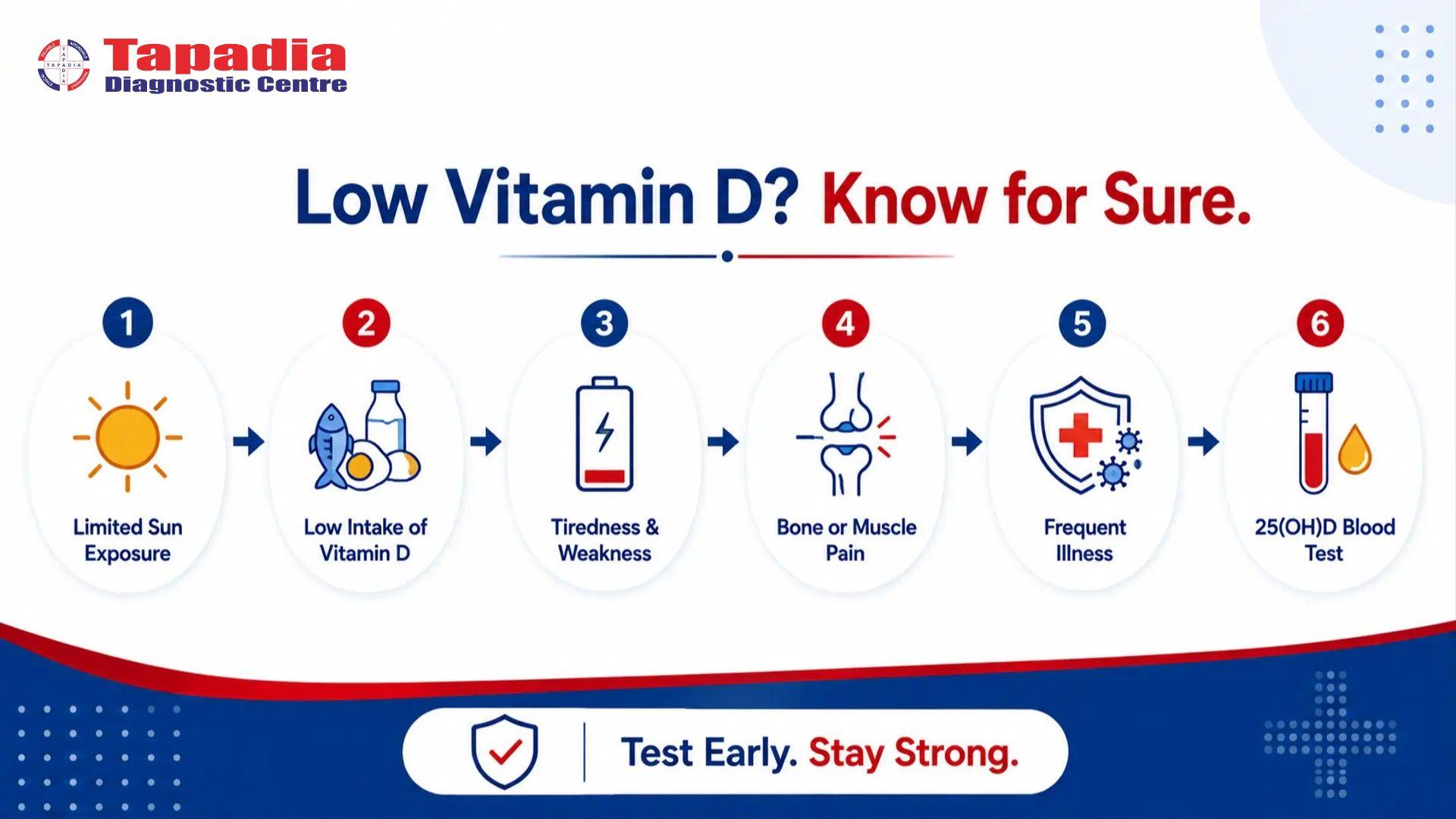
The signs can be easy to miss. You may feel weak, get sick often, or feel low for no clear reason. A simple blood test is the best way to know for sure.
Why Your Body Needs Vitamin D
Vitamin D helps your body in many important ways every day:
Bone health: It helps your body take in calcium so your bones stay strong.
Muscle support: It helps your muscles work well and stay strong.
Immune support: It plays a role in maintaining immunity.
Mood support: It may also help support brain health and mood.
If you do not get enough vitamin D, your body cannot use calcium well. Then it may take calcium from your bones. Over time, this can make your bones weak and easy to break.
Signs of Low Vitamin D
Vitamin D deficiency can feel different from person to person, but a few warning signs appear often. If you have ongoing symptoms without a clear reason, testing can help rule it out.
Signs in Adults
Feeling tired: You may feel weak or low on energy even after rest.
Bone or joint pain: You may feel a dull ache in your back, legs, or joints.
Weak muscles or cramps: Climbing stairs or getting up from a chair may feel harder.
Getting sick often: You may catch colds or other infections more easily.
Slow recovery: Your body may take longer to feel better after illness or strain.
Low mood: Some people feel sad, low, or less motivated.
Signs in Children
In children, very low vitamin D can cause rickets. This means the bones become soft and weak. Signs may include:
Bowed legs or knock knees
Muscle pain or soreness
Late walking or slow physical growth
What Causes Low Vitamin D Levels?
Your body gets vitamin D in three ways: sunlight exposure, the foods you eat, and dietary supplements. A deficiency occurs when your body either does not get enough vitamin D or cannot process it properly.
Lifestyle & Environment | Medical & Biological |
|---|---|
Using heavy sun protection | Age over 65 |
Wearing full-cover clothing | Digestive conditions |
Low diet in fish and dairy | Obesity (BMI over 30) |
Health Problems That Can Lower Vitamin D
Some health problems can make it hard for your body to absorb or use vitamin D properly.
Gut problems: Conditions like celiac disease, Crohn’s disease, and cystic fibrosis can stop the body from absorbing nutrients well.
Kidney or liver disease: These organs help turn vitamin D into a form your body can use.
Obesity: Body fat can hold on to vitamin D and keep less of it in the blood.
Weight-loss surgery: Some surgeries make it harder for the body to absorb vitamins.
Who Has a Higher Risk?
Anyone can have low vitamin D, but some people have a higher risk.
Older adults: The body makes less vitamin D with age.
People with dark skin: Darker skin may need more sun to make the same amount of vitamin D.
People who stay indoors: Less time in sunlight can lower vitamin D levels.
People with limited diets: Eating little fish, eggs, or dairy can lower intake.
What Can Happen If Low Vitamin D Is Not Treated?
If low vitamin D is not treated, it can cause serious health problems over time.
Soft bones in adults: This can cause bone pain and weak muscles.
Weak and thin bones: Bones can break more easily, even after a small fall.
Low calcium levels: This can lead to muscle cramps and other health problems.
Higher risk of falls: Weak muscles and poor balance can make falls more likely, especially in older adults.
Why a Blood Test Matters
Symptoms alone cannot tell you if you have low vitamin D. Tiredness, body aches, and weakness can also happen with anemia, thyroid problems, stress, or poor sleep.
It is also not safe to guess and take high doses of Vitamin D. Too much vitamin D can build up in the body and may cause nausea, confusion, frequent urination, and kidney problems.
Which Test Checks Vitamin D?
The best way to check is a simple blood test called the 25-hydroxy vitamin D test, or 25(OH)D.
This test gives your doctor a clear number, so the next step is based on facts, not guesswork.
Getting tested early is a simple, proactive step toward protecting your long-term bone and immune health. You can easily schedule your preventative health screening directly with Tapadia Diagnostics to get clear insights into your health status.
How to Increase Your Vitamin D Levels
If your test shows low vitamin D, your doctor can help you raise it in a safe way.
1. Safe Sun Exposure
Exposure to sunlight can help your body make vitamin D. But sunlight alone may not be enough if your levels are very low.
2. Vitamin D-Rich Foods
Some foods can help raise your vitamin D level:
Fatty fish like salmon, tuna, trout, and mackerel
Egg yolks
Fortified foods like milk, orange juice, and cereals
Mushrooms
3. Doctor-Guided Supplements
Your doctor may also suggest vitamin D supplements.
Vitamin D3: A common form that is often easy for the body to use.
Vitamin D2: Another form that may be used in some treatment plans.
Do not start high-dose supplements on your own. Talk to a doctor first so you get the right dose.
Can sunlight and diet alone fix low vitamin D?
Sunlight and food both matter, but they are not always enough to correct a deficiency once it is established. The right approach depends on how low the level is, whether symptoms are present, and whether another health issue is affecting absorption or metabolism.
Natural sunlight helps the body make vitamin D, while foods such as egg yolk, fatty fish, and fortified products may contribute to daily intake. Even so, lifestyle alone may not be sufficient for everyone. Some people need medical guidance, follow-up testing, or a structured treatment plan.
That is why testing first makes sense. It helps you avoid guessing and gives you a better starting point for action.
Key Takeaway
Low vitamin D is common and the symptoms are easy to miss. You may feel tired, weak, achy, or get sick often, but some people have no clear symptoms at all. A simple blood test is the only sure way to know your level. If you have symptoms or are at higher risk, early testing can help you get the right treatment and protect your bone and muscle health.
Frequently asked questions
Yes. Some people have low vitamin D without obvious symptoms. That is why testing can be useful when risk factors are present or when deficiency has occurred before.
It is better to base long-term supplementation on medical advice and, when appropriate, a test result. Symptoms alone do not confirm deficiency, and the right plan depends on your overall health picture.
This varies from person to person and also on the underlying cause of Vitamin D deficiency.
It is usually checked with a 25-hydroxy vitamin D blood test. Your doctor may combine that result with your symptoms, history, and other findings before recommending treatment.
People with past deficiency, ongoing symptoms, limited sun exposure, or conditions that affect absorption may need follow-up testing based on medical advice. Repeat testing can also help track response after treatment.
Disclaimer: Content is for informational and educational purposes only and does not substitute for professional medical advice, diagnosis, or targeted clinical treatment. For any health related concerns or symptoms please seek advice from a qualified medical professional.