






Know More About This Test
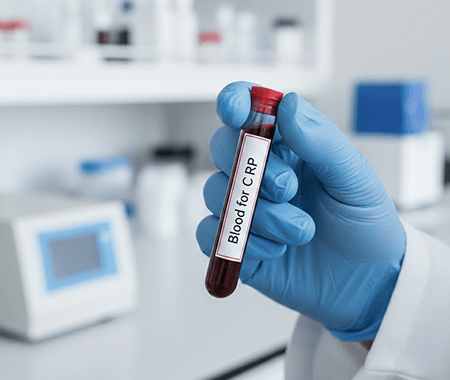
The C-Reactive Protein (CRP) test is a blood investigation that measures the level of CRP, an acute-phase protein produced by the liver when there is inflammation anywhere in the body. CRP levels rise rapidly in response to infections, tissue injury, autoimmune disorders, and chronic inflammatory diseases. Unlike disease-specific markers, CRP reflects the presence and intensity of inflammation, making it a valuable early indicator of underlying pathology.
CRP is widely used in both acute and chronic medical conditions because its levels increase within hours of inflammation and fall quickly once the underlying cause resolves, allowing clinicians to monitor disease progression and treatment response.
Why Is This Test Recommended?
Doctors recommend CRP testing when a patient presents with unexplained fever, suspected bacterial infection, autoimmune disease symptoms, inflammatory joint disorders, or cardiovascular risk assessment. It is also used to monitor chronic inflammatory conditions such as rheumatoid arthritis, inflammatory bowel disease, and post-surgical recovery.
What Do the Results Indicate?
Normal CRP levels usually indicate absence of significant inflammation. Mild to moderate elevation may be seen in viral infections or chronic low-grade inflammation, while markedly high levels are often associated with bacterial infections, severe trauma, or inflammatory diseases.
How Is the Test Performed and Prepared For?
A venous blood sample is collected via a simple needle prick in the arm, which is quick and minimally invasive.
No fasting is required unless the test is combined with other blood work that demands it, such as lipid panels.
Results must always be interpreted alongside clinical findings, symptoms, and other tests for accurate diagnosis—discuss any recent illnesses or medications with your doctor beforehand.
Frequently Asked Questions (FAQs)
Does high CRP mean infection?
Often, but not always—elevated CRP frequently signals an infection, particularly bacterial ones where levels can exceed 100 mg/L, but it can also rise due to non-infectious causes like trauma, surgery, or autoimmune flares. Your doctor will correlate it with symptoms, white blood cell counts, and possibly cultures to pinpoint the source and guide appropriate treatment.
Can stress raise CRP levels?
Mildly, yes—chronic stress can contribute to low-grade inflammation, subtly increasing CRP through elevated cortisol and lifestyle factors like poor sleep or diet. While acute stress has less impact, managing it via exercise, mindfulness, or therapy may help lower baseline levels; mention ongoing stress to your healthcare provider for holistic evaluation.
Is CRP useful in heart disease?
Yes, especially hs-CRP—a high-sensitivity version of the test that detects subtle elevations (under 3 mg/L) associated with atherosclerosis and cardiovascular risk. It's often used alongside cholesterol checks to stratify heart disease probability, guiding preventive strategies like statins or lifestyle modifications for at-risk individuals.
How fast does CRP change?
Within hours—CRP is an acute-phase reactant, so levels can double every 6–8 hours after inflammation onset and peak in 24–48 hours, then decline rapidly (half-life of about 19 hours) once resolved. This makes it ideal for tracking acute events or treatment efficacy, with serial testing often scheduled every 1–2 days in hospital settings.
Can CRP detect cancer?
It is not cancer-specific—CRP may rise in cancers due to associated inflammation or tumor necrosis, but it's a non-specific marker and can't diagnose malignancy on its own. Elevated levels prompt further investigation like imaging or tumor markers (e.g., CEA), but normal CRP doesn't rule out cancer; always pair it with targeted screenings based on risk factors.