






Know More About This Test
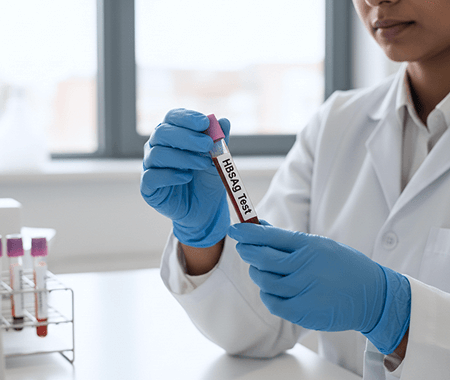
The HBsAg test detects the presence of Hepatitis B surface antigen in the blood, indicating active Hepatitis B virus infection. It is a key marker for identifying both acute and chronic Hepatitis B. Early detection is essential, as untreated chronic infection can progress to cirrhosis or liver cancer.
Why Is This Test Recommended?
HBsAg testing is advised for individuals with liver symptoms, abnormal liver enzymes, pregnancy, blood donation screening, pre-operative evaluation, or high-risk exposure.
What Do the Results Indicate?
A positive HBsAg result indicates current Hepatitis B infection. A negative result usually indicates no active infection or successful immunization.
How Is the Test Performed and Prepared For?
A blood sample is taken. No special preparation is required.
Frequently Asked Questions (FAQs)
Does positive mean chronic infection?
Needs duration assessment; if HBsAg remains positive for more than 6 months, it indicates chronic Hepatitis B infection requiring long-term management.Can vaccinated people test positive?
No; vaccination produces protective antibodies (anti-HBs) but does not cause HBsAg positivity, as the vaccine does not contain live virus.Is it contagious?
Yes, if positive; Hepatitis B spreads through blood, body fluids, unprotected sex, and from mother to baby during childbirth.Can infection be silent?
Very often; many people with Hepatitis B have no symptoms for years, making routine screening important for early detection and prevention.Is treatment always needed?
Depends on stage; acute infection may resolve on its own, while chronic infection requires antiviral therapy based on viral load and liver function.