






Know More About This Test
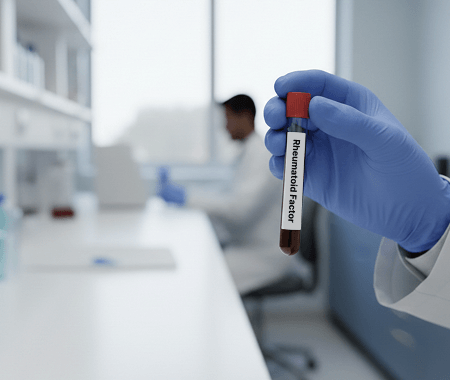
The Rose-Waaler Test detects Rheumatoid Factor (RF), an autoantibody that targets the Fc portion of IgG antibodies. RF indicates autoimmune activity, especially in rheumatoid arthritis. Rose-Waaler is a traditional agglutination method used as part of autoimmune arthritis evaluation.
Why Is This Test Recommended?
The Rose-Waaler Test is recommended for suspected rheumatoid arthritis, chronic joint pain and swelling, morning stiffness lasting more than 1 hour, monitoring autoimmune disease activity, and differentiation from osteoarthritis. It helps evaluate symmetrical joint inflammation and other autoimmune conditions.
What Do the Results Indicate?
Positive RF supports RA diagnosis and suggests immune system dysregulation. High titers correlate with severe disease and aggressive progression. Low-positive results may be nonspecific. RF may appear years before symptoms and can be present in other autoimmune disorders. Absence does not exclude RA. Results must be correlated with Anti-CCP and CRP, and clinical symptoms remain essential for diagnosis.
How Is the Test Performed and Prepared For?
A simple venous blood draw is performed. No fasting is required. The test involves minimal discomfort and is safe and low-risk. Results are typically available within 24–48 hours.
Frequently Asked Questions (FAQs)
Is RF always positive in RA?
No; approximately 20-30% of RA patients are seronegative, meaning they have rheumatoid arthritis without detectable RF in their blood.Can healthy people have RF?
Rarely; RF can occasionally be found in healthy individuals, especially older adults, and in certain infections or other autoimmune conditions.Is this test confirmatory?
No; RF positivity alone cannot confirm RA diagnosis; it must be interpreted alongside clinical symptoms, imaging, and other antibody tests like Anti-CCP.Is repeat testing useful?
Sometimes; repeat testing may be helpful to monitor disease activity, assess treatment response, or clarify initial borderline results.Does RF level change with treatment?
Yes; RF levels may decrease with effective treatment and disease remission, though they don't always correlate directly with clinical improvement.