

Know More About This Test
The Rapid Plasma Reagin (RPR) test is a blood test used to screen for syphilis — a sexually transmitted infection (STI) caused by the bacterium Treponema pallidum.
It works by detecting certain antibodies that the body produces when syphilis bacteria damage body tissues.
Syphilis is a serious but entirely curable infection that can spread silently, often without any visible symptoms - through sexual contact. If left untreated, it can progress through four stages and cause permanent damage to the heart, brain, and nervous system.
When a pregnant woman has syphilis, the infection can pass to her unborn baby, causing serious complications including stillbirth. The good news is that when detected early, syphilis responds well to treatment with antibiotics.
Why Is This Test Recommended?
This test may be recommended to:
Screen for syphilis when symptoms of a sexually transmitted infection are present such as genital sores, skin rashes, swollen lymph nodes, or oral ulcers
Detect syphilis early in individuals who have had known or suspected exposure to an infected sexual partner, so that treatment can begin before the infection progresses
Perform routine antenatal screening in all pregnant women, as syphilis can pass from mother to baby during pregnancy, causing congenital syphilis - a condition that is entirely preventable with early detection and treatment
Monitor the success of syphilis treatment, as RPR antibody levels fall progressively after effective treatment and can confirm that the infection has been cleared
Symptoms or Conditions That May Require This Test
This test may be ordered in the following situations:
One or more painless sores (chancres) on or around the genitals, lips, or mouth the most common sign of early (primary) syphilis, appearing 10 to 90 days after exposure
A rough, reddish-brown rash on the palms of the hands and soles of the feet, often accompanied by mild fever, sore throat, fatigue, hair loss, swollen glands, or muscle aches the hallmark features of secondary syphilis
No symptoms at all despite known or suspected exposure - the latent stage of syphilis is completely silent, yet the infection can continue to damage the body and be passed on to others
Neurological symptoms such as severe headache, vision or hearing changes, or confusion, which may indicate late-stage syphilis affecting the brain and nervous system (neurosyphilis)
Chest pain or breathing difficulty in someone with a history of untreated syphilis, as the infection can damage the heart and blood vessels in its later stages
A positive result on another syphilis screening test (such as VDRL) that needs to be confirmed or clarified
A new diagnosis of another STI - including HIV, gonorrhoea, or chlamydia as
co-infection with syphilis is common and warrants simultaneous screening
Why Do I Need This Test?
Syphilis is one of the most common sexually transmitted infections in India and worldwide - and one of the most underdiagnosed, because many people have no symptoms at all in the early stages.
Without treatment, syphilis can quietly cause lasting damage to the nervous system, heart, and blood vessels over many years. In pregnant women, untreated syphilis can lead to miscarriage, stillbirth, or a baby born with congenital syphilis - a serious condition that is entirely preventable with timely antenatal screening and antibiotic treatment.
Preparation
No fasting required, making the process straightforward - simply avoid heavy meals if combined with other tests, and inform your doctor of any recent illnesses or medications.
How Is the Test Performed?
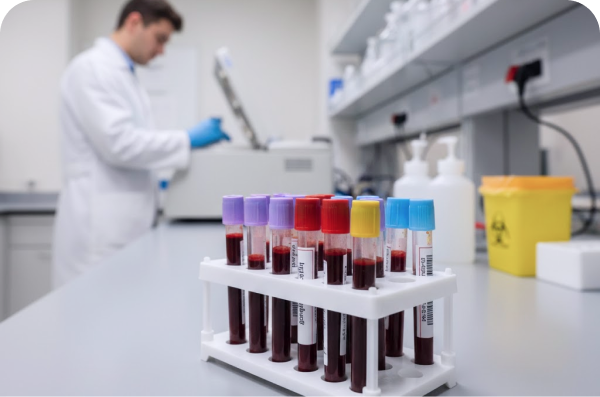
Blood sample collection via a quick venipuncture from the arm vein, usually in a clinic or lab, with minimal discomfort and rapid processing for timely results.
What Does the Rapid Plasma Reagin (RPR) Test Measure?
The RPR test measures IgM and IgG antibodies - known as reagins, that the immune system produces in response to tissue damage caused by Treponema pallidum, the syphilis bacterium.
These antibodies are directed against lipid antigens - specifically cardiolipin - rather than against the bacterium itself, which is why the RPR is described as a non-treponemal test and why all reactive results need to be confirmed with a treponemal-specific test.
The antigen used in the RPR test contains cardiolipin, lecithin, and cholesterol, combined with charcoal particles as a visualising agent.
When reagin antibodies in the patient's serum bind to this antigen, the charcoal particles clump together and produce the visible black clusters that indicate a reactive result.
What Do the Results Mean?
RPR results are reported as either non-reactive (negative) or reactive (positive). Reactive results are further expressed as a titre:
Non-Reactive (Negative): No reagin antibodies were detected. This generally means syphilis is not currently present, or that the infection was previously treated and antibody levels have fallen. In cases of very recent exposure, however, a negative result does not completely rule out early infection antibodies may not yet have reached detectable levels
Reactive - Low Titre (1:1 to 1:8): Antibodies were detected at a low level. This may indicate early primary syphilis, late-stage syphilis, previously treated syphilis with persistently detectable antibodies, or a biological false-positive result from a non-syphilitic condition.
Reactive - Medium to High Titre (1:8 to 1:32 or higher): Antibodies are present at a significant level, strongly suggesting active syphilis infection. Titres of 1:32 or above are most commonly seen in secondary syphilis.
Four-fold or greater rise in titre on follow-up: Suggests treatment failure or re-infection - clinical reassessment and re-treatment are required
Four-fold or greater fall in titre after treatment: Confirms a good treatment response - most patients reach a non-reactive result within 6–18 months of effective treatment, depending on the stage at which treatment was started
Frequently Asked Questions ( FAQs )
Is fasting required?
No - there is no fasting or special preparation needed for the RPR test.
Patients can eat and drink as normal, and the test can be done at any time of day.How long do results take?
Results are typically available within 24–48 hours approx.Does a reactive RPR confirm syphilis?
No - a reactive RPR is a screening finding that must be confirmed with a specific treponemal antibody test (such as TPHA or FTA-ABS) before a diagnosis of syphilis can be made. Biological false-positive RPR results can occur in a number of non-syphilitic conditions.What is the difference between RPR and VDRL?
Both are non-treponemal syphilis screening tests using similar cardiolipin-based antigens. The RPR uses charcoal particles as a visualising agent, making the result visible to the naked eye without a microscope. The RPR also does not require the blood sample to be heat-treated before testing, making it more convenient in practice. Both tests have comparable clinical value for syphilis screening, though RPR is generally considered to have slightly better sensitivity.Can RPR be used to monitor treatment?
Yes - the quantitative RPR titre is the standard method for monitoring how well treatment is working. Titres typically fall four-fold within 6–12 months of effective treatment and most patients reach a non-reactive result within 6–18 months. A four-fold rise in titre after treatment signals failure or re-infection.Is syphilis curable?
Yes - syphilis is completely curable with the correct antibiotic treatment. Parenteral penicillin is the treatment of choice at all stages. Early-stage syphilis responds particularly well to treatment, and cure prevents the serious long-term complications that arise from untreated disease.Will I always test positive after a previous syphilis infection? Not necessarily. After successful treatment, reagin antibody levels fall progressively and most people eventually become non-reactive on the RPR. However, some individuals particularly those treated at a later stage - may retain a persistently low-titre reactive result (known as a "serofast" result) without evidence of active infection. In these cases, the titre remains stable rather than rising, and the treponemal confirmatory test stays positive as a permanent marker of past infection.