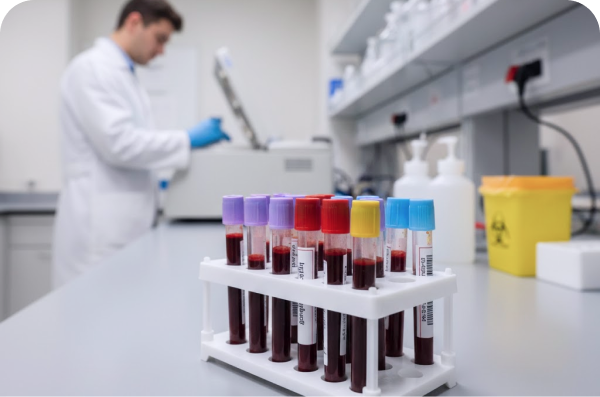


Know More About This Test
The Beta HCG Free (Human Chorionic Gonadotropin) test is a specialized blood analysis that measures the "free" or unbound portion of the HCG hormone.
While total HCG is commonly used to confirm pregnancy, the Free Beta subunit is a critical marker used primarily during the first trimester of pregnancy as part of a combined screening process to assess the health and chromosomal development of the fetus.
Why Is This Test Recommended?
Your obstetrician or healthcare provider typically recommends this test between the 11th and 14th week of pregnancy for the following reasons:
First Trimester Screening (Dual Marker): It is a core component of the "Dual Marker" test, which combines this blood result with an ultrasound (Nuchal Translucency) to calculate the risk of chromosomal abnormalities.
Risk Assessment for Down Syndrome (Trisomy 21): Abnormally high levels of Free Beta HCG can be an early indicator of an increased risk for Down Syndrome.
Screening for Edwards Syndrome (Trisomy 18): Conversely, significantly low levels may suggest a higher risk for Edwards Syndrome or Patau Syndrome.
Monitoring Placental Health: Since HCG is produced by the placenta, its levels reflect how well the placenta is supporting the developing baby.
Evaluating Molar Pregnancies: In rare cases where a non-viable pregnancy develops as a mass of cysts, Free Beta HCG levels can be extremely elevated.
Symptoms or Conditions That May Require a Free Beta HCG Test
This test is usually a proactive screening tool rather than a response to symptoms. However, it is especially prioritized if:
Advanced Maternal Age: Pregnant women over the age of 35 are at a statistically higher risk for chromosomal variations.
Abnormal Ultrasound Findings: If an early ultrasound shows increased fluid at the back of the baby's neck (Nuchal Translucency).
Family Genetic History: A history of chromosomal disorders in previous pregnancies or within the immediate family.
Assisted Reproduction: Pregnancies achieved through IVF or other fertility treatments are often monitored more closely using these markers.
Advantages of Free Beta HCG Screening
Early Insight: Provides vital information as early as the 11th week, allowing parents more time for counseling and decision-making.
High Accuracy in Combination: When combined with the PAPP-A (Pregnancy-Associated Plasma Protein A) test and an ultrasound, the detection rate for Down Syndrome is approximately 85–90%.
Safe for the Baby: Unlike invasive diagnostic tests, this is a simple maternal blood draw that carries zero risk of miscarriage.
How Do I Prepare for the Test?
No Fasting Required: You may eat and drink normally before your appointment.
Ultrasound Coordination: Ensure you have your recent ultrasound report (showing the "CRL" or Crown-Rump Length) available, as the lab needs the exact gestational age to interpret the results correctly.
Medication Disclosure: Inform your doctor if you are taking any hormonal supplements (like Progesterone) to support the pregnancy.
Timing is Key: This test must be performed within a specific window (typically 11 weeks to 13 weeks and 6 days). Testing outside this window may yield inaccurate results.
What Do the Results Mean?
Interpreting these results is complex because "normal" levels change every single day of the pregnancy.
Elevated Levels: High Free Beta HCG (above the median for the specific day of pregnancy) is associated with an increased risk of Trisomy 21 (Down Syndrome).
Decreased Levels: Low Free Beta HCG is associated with an increased risk of Trisomy 18 (Edwards Syndrome) or potential placental issues.
Note: A "High Risk" result does not mean the baby has a condition. It simply means that your risk is higher than the average for your age group, prompting a recommendation for a follow-up consultation with a genetic counselor.
Lifestyle Tips to Help Maintain a Healthy Pregnancy
While you cannot directly control your hormone levels, you can support your body and the placenta during this critical screening period:
Folic Acid Supplementation: Ensure you are taking at least 400mcg of folic acid daily as prescribed to support neural tube development.
Balanced Nutrition: Focus on a diet rich in DHA (found in fish or walnuts) and iron-rich foods like spinach and lean proteins.
Manage Stress: Screening periods can be anxious. Practice prenatal yoga or meditation to stay grounded while waiting for results.
Avoid Toxins: Strictly avoid alcohol, smoking, and excessive caffeine, as these can impact placental development and blood flow to the fetus.
Attend All Scans: The blood test is only half of the picture; ensure you do not miss your Nuchal Translucency (NT) ultrasound scan.
Frequently Asked Questions ( FAQs )
Is it different from urine pregnancy test?
Yes, the free beta hCG blood test is more sensitive and quantitative than a urine pregnancy test, allowing for earlier detection and precise measurement of hormone levels to monitor pregnancy viability or potential issues.Can it detect early pregnancy?
Yes, free beta hCG can detect early pregnancy as soon as 7–10 days after conception by measuring the hormone produced by the developing placenta, often before a missed period.Is repeat testing needed? Often, yes—repeat testing of free beta hCG levels every 48 hours is commonly needed to track the hormone's doubling pattern, which helps confirm normal pregnancy progression or identify problems like miscarriage or ectopic pregnancy.
Can it detect cancer? Yes, in specific cases, elevated free beta hCG levels can indicate certain cancers like germ cell tumors or choriocarcinoma, particularly when monitored in non-pregnant individuals or alongside other tumor markers.
Is it safe? Yes, the free beta hCG test is completely safe, involving only a simple blood draw with no risks to the pregnancy or fetus, and it's a standard, non-invasive tool for routine prenatal care.