






Know More About This Test
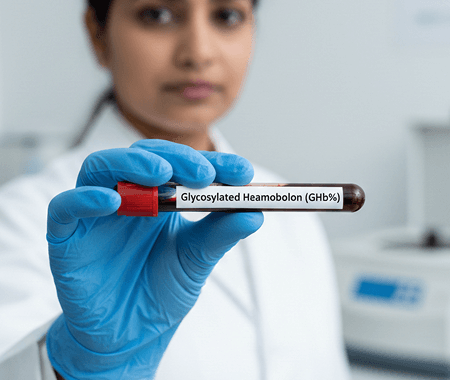
Glycosylated Hemoglobin (GHb%) measures the percentage of hemoglobin that is bound to glucose in the blood. It reflects the average blood sugar level over the past 2–3 months, making it a reliable marker for long-term glucose control.
Because red blood cells survive for about 120 days, GHb% is not affected by short-term fluctuations in blood sugar.
Why Is This Test Recommended?
This test is recommended for diagnosing diabetes, monitoring long-term glycemic control in diabetic patients, and assessing the risk of diabetes-related complications.
What Do the Results Indicate?
Higher GHb% levels indicate poor blood sugar control and increased risk of complications. Normal levels suggest effective glucose regulation.
How Is the Test Performed and Prepared For?
A blood sample is taken. Fasting is not required.
Frequently Asked Questions (FAQs)
Is GHb% same as HbA1c?
Yes, GHb% and HbA1c refer to the same test that measures glycosylated hemoglobin; both terms are used interchangeably in clinical practice.
Does fasting affect results?
No, fasting does not affect GHb% results since it reflects average blood sugar over 2–3 months, not current levels.
Can anemia affect results?
Yes, certain types of anemia and conditions affecting red blood cell lifespan can interfere with GHb% accuracy and may require alternative testing methods.
How often should it be tested?
Every 3–6 months for diabetic patients; those with well-controlled diabetes may test every 6 months, while poorly controlled cases require testing every 3 months.
Is it used for diagnosis?
Yes, GHb% is used both for diagnosing diabetes (values ≥6.5% indicate diabetes) and for monitoring long-term blood sugar control in known diabetic patients.