

Know More About This Test
The Joint Pain / SLE / Collagen Profile-I is a comprehensive autoimmune screening panel designed to evaluate connective tissue disorders. It includes tests for autoimmune antibodies that help detect conditions such as systemic lupus erythematosus (SLE), rheumatoid arthritis, and other collagen vascular diseases.
This profile is particularly useful when symptoms are non-specific and involve multiple organ systems.
Why Is This Test Recommended?
It is recommended for individuals with chronic joint pain, swelling, fatigue, unexplained rashes, fever, or suspected autoimmune diseases.
What Do the Results Indicate?
Positive results suggest autoimmune activity and help narrow down specific connective tissue disorders. Negative results reduce the likelihood but do not completely exclude disease.
How Is the Test Performed and Prepared For?
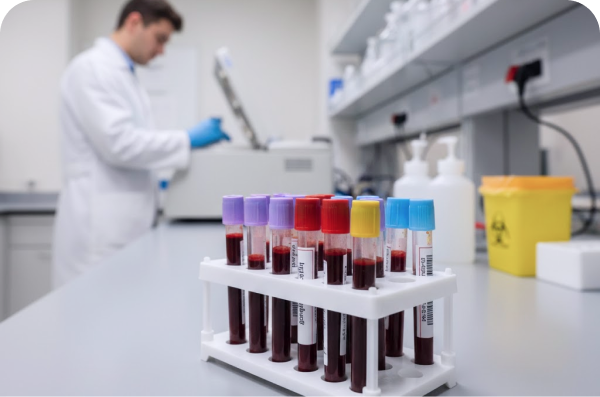
A blood sample is collected. No fasting is required.
Frequently Asked Questions (FAQs)
Is this a diagnostic test? No, this is a screening tool designed to detect potential autoimmune activity and guide further evaluation, rather than providing a definitive diagnosis, which often requires additional clinical correlation and specialized tests.
Can results be false positive? Yes, results can be false positive due to cross-reactivity with other antibodies or non-specific immune responses, so positive findings should always be confirmed with follow-up tests like biopsies or more targeted antibody assays.
Is it useful in early disease? Yes, it is particularly useful in early disease stages, as it can identify rising antibody levels before full symptoms develop, allowing for timely intervention to prevent progression of conditions like SLE or rheumatoid arthritis.
Does it replace biopsy? No, it does not replace a biopsy, which remains the gold standard for confirming tissue-specific autoimmune damage, while this profile provides initial serological evidence to justify proceeding to biopsy.
Is repeat testing required? Sometimes, yes—repeat testing may be required after 4–6 weeks if initial results are borderline or to monitor disease activity and treatment response in confirmed autoimmune conditions.