


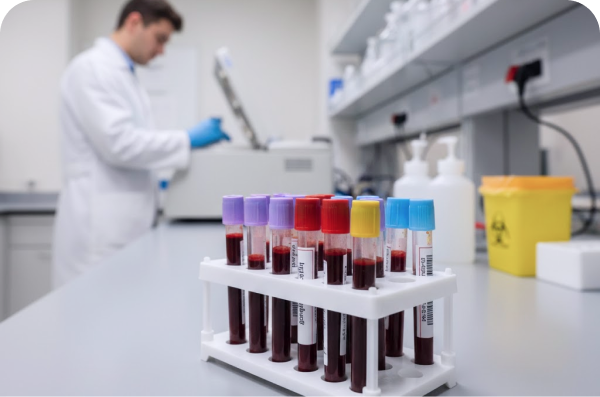


The NIPT test analyzes cell-free fetal DNA from maternal blood to screen for chromosomal conditions like Down syndrome (Trisomy 21), Edwards syndrome (Trisomy 18), and Patau syndrome (Trisomy 13), with over 99% accuracy for these trisomies along aneuploidy of other autosomes.
It also detects sex chromosome abnormalities and microdeletions in advanced panels. Low-risk results are highly reassuring, while high-risk results prompt diagnostic confirmation. This safe screening has revolutionized prenatal care by reducing the need for invasive procedures.
Doctors recommend NIPT from 10 weeks of pregnancy, especially for high-risk pregnancies such as advanced maternal age, abnormal ultrasound findings, or positive first-trimester screening results. As per guidelines NIPT can be offered to any pregnant lady irrespective of markers .
Why Is This Test Recommended?
You may need this test to:
Early risk assessment for common aneuploidies without miscarriage risk
Determine fetal sex non-invasively for family planning - Never
Screen IVF pregnancies or those with a family genetic history - No
Monitor multiple pregnancies (with adjusted accuracy) - Twin
Symptoms or Conditions That May Require a NIPT Test
You may need this test if you experience:
Maternal age over 35 years, which increases trisomy risk
Ultrasound findings like increased nuchal translucency
Elevated first-trimester combined screening risk
Previous child with a chromosomal abnormality
Parental balanced translocation carriers
Why Do I Need a NIPT Test?
This simple blood draw provides vital early information (10–20 weeks) to prepare for the baby's health needs, avoiding unnecessary stress from false positives in traditional screening tests.
Advantages of NIPT Screening
NIPT enables early detection of fetal aneuploidies as early as the 10th week of gestation, without requiring invasive procedures like amniocentesis.
It offers high sensitivity and specificity, significantly reducing false positives and false negatives compared to traditional screening methods.
How Do I Prepare for the NIPT Test?
No fasting required; ensure pregnancy is ≥10 weeks, confirmed by ultrasound.
Stay hydrated for easy vein access.
Discuss panel options (basic trisomies vs. expanded) with your doctor.
Genetic counseling before and after testing is advised for clarity.
Contact us for genetic counselling
How Is the NIPT Test Performed?
The procedure involves a maternal venipuncture:
Consultant confirms eligibility and obtains consent.
Nurse cleans the arm and inserts a needle to collect 10–20 mL of blood in an special TUBE.
Sample is shipped to US for cfDNA analysis (fetal fraction ≥4%).
Results are usually available within 10 working days.
What Happens After the Test?
Resume your normal prenatal routine immediately; light walking is okay.
Avoid heavy lifting if bruising occurs.
Reports are downloaded and low-risk pregnancies continue with routine prenatal scans.
When Should I Consult a Doctor After the Test?
Contact your doctor promptly if:
High-risk result for any condition
No-call result due to low fetal fraction (<4%) requiring repeat testing
Symptoms like bleeding unrelated to the test
You need help understanding or interpreting the results
Contact us for genetic counselling
Risks Associated With the NIPT Test
Extremely safe; no radiation or invasive procedure is involved. Rare false positives and false negatives can occur (particularly for microdeletions), and uncertain results may cause anxiety.
Lifestyle Tips to Help Maintain a Healthy Pregnancy
Continue prenatal vitamins with 400 mcg of folic acid daily.
Eat a balanced diet rich in fruits, vegetables, and lean proteins.
Moderate exercise like walking for 30 minutes a day.
Avoid smoking and alcohol; manage stress through yoga or relaxation.
Attend all antenatal visits on time.
What Does the NIPT Test Measure?
Fetal DNA fraction in maternal plasma for:
Chromosome 21, 18, and 13 copy numbers
Other autosomal aneuploidy
Optional microdeletions (22q11, etc.)
These help detect aneuploidies non-invasively.
What Do the Results Mean?
Low risk: Unlikely to be affected.
High risk: Confirmatory testing is recommended.
No-call: Repeat testing or ultrasound follow-up may be required.
What Should I Do If My NIPT Results Are Abnormal?
Schedule genetic counseling promptly and connect with us.
Arrange diagnostic testing (amniocentesis or CVS).
Discuss available options and support with a multidisciplinary care team.
Can NIPT Results Be Affected by Other Factors?
Yes. Maternal obesity (BMI >30), vanishing twin, and maternal malignancy can affect results.
Factors That May Affect NIPT Levels
Low fetal fraction due to early gestation or maternal obesity
Maternal medications (generally not a significant factor)
Dilution effect in multiple pregnancies
Sample hemolysis may invalidate the test
Frequently Asked Questions (FAQs)
1. What causes false positives?
Maternal factors, such as certain medical conditions including cancer, may contribute.
2. What is the normal range?
Are generally considered low risk.
3. Is fasting required?
No.
4. Does a high-risk result mean the baby is affected?
No. A high-risk result should always be confirmed with diagnostic testing. Amniotic fluid testing for karyotyping FISH & microarray
5. When can the test be performed?
From 10 weeks of pregnancy onward.
6. Does NIPT detect all birth defects?
No. Structural abnormalities disorders due to mutations in genes and other microdeletions not covered in panels will not be detected.
7. How long do the results take?
Typically 10 working days.