






Know More About This Test
The Random Blood Sugar (RBS) test measures blood glucose at any time of day without requiring fasting. It is useful for quick diabetes screening and reflects immediate glucose status, making it a common emergency diagnostic tool.
Why Is This Test Recommended?
This test is recommended for:
Symptoms of diabetes
Emergency assessment of blood sugar
Routine health check-ups
Monitoring glucose control in diabetics
Gestational diabetes suspicion
Understanding RBS Levels
Normal: <140 mg/dL
Borderline: 140–199 mg/dL
≥200 mg/dL suggests diabetes
Interpretation depends on symptoms and context. Abnormal results require confirmation with fasting glucose or HbA1c testing.
Symptoms or Conditions That May Require This Test
Excessive thirst
Frequent urination
Unexplained fatigue
Blurred vision
Sudden weight loss
How Do I Prepare for the Test?
No fasting is needed. The test can be performed at any time regardless of when you last ate.
How Is the Test Performed?
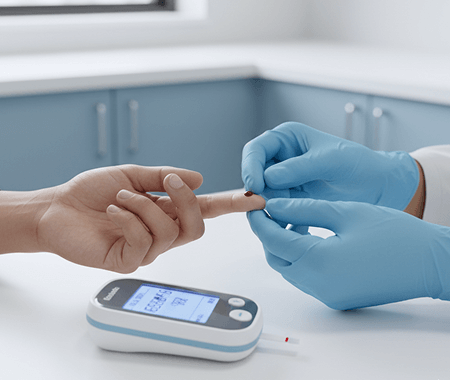
A blood sample is collected via finger prick or from a vein. The procedure is quick, simple, and causes minimal discomfort. Results may be available immediately.
What Happens After the Test?
High values need confirmatory tests such as fasting blood sugar or HbA1c. Lifestyle changes may be advised, and medication may be initiated if diabetes is confirmed. Monitoring frequency is individualized to prevent complications.
Frequently Asked Questions (FAQs)
Is RBS reliable alone?
No, RBS alone is not sufficient for definitive diabetes diagnosis and should be confirmed with fasting glucose or HbA1c tests.Can stress raise RBS?
Yes, stress can temporarily elevate blood sugar levels through hormonal responses, affecting RBS results.Is it used in emergencies?
Yes, RBS is commonly used in emergency settings to quickly assess blood glucose levels in symptomatic or unconscious patients.Does food affect it?
Strongly; recent food intake significantly affects RBS values, which is why it's used for screening rather than definitive diagnosis.Should it be repeated?
Often; abnormal RBS values typically require repeat testing with fasting glucose or HbA1c for confirmation and proper diagnosis.