





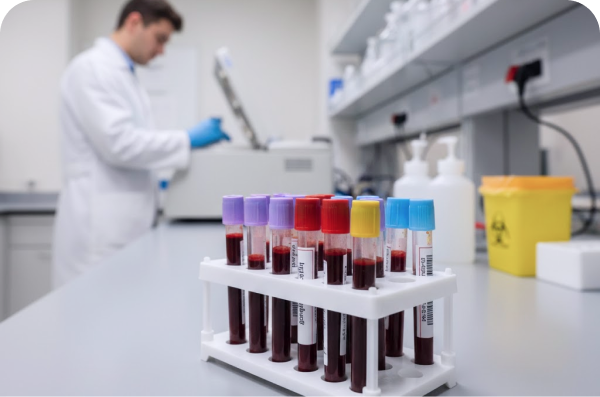


Know More About This Test
Renal Profile-II is a comprehensive blood test panel designed to assess kidney function and electrolyte balance. It typically includes urea, creatinine, sodium, potassium, chloride, calcium, phosphorus, and sometimes uric acid.
Kidneys regulate waste removal, fluid balance, and electrolytes. Even mild dysfunction can disrupt these systems, making this profile essential for early diagnosis and monitoring of kidney disease.
Why Is This Test Recommended?
This test is recommended to:
Evaluate kidney function
Monitor chronic kidney disease
Assess electrolyte imbalance
Monitor patients on nephrotoxic drugs
Understanding Renal Profile-II
Creatinine reflects filtration efficiency, while electrolytes indicate fluid and acid-base balance. Abnormalities may signal dehydration, kidney failure, or hormonal disorders.
Symptoms or Conditions That May Require This Test
Swelling of feet or face
Reduced urine output
Fatigue
High blood pressure
Why Do I Need This Test?
To detect early kidney damage before symptoms worsen.
How Do I Prepare for the Test?
Fasting may be required; follow your doctor's advice.
How Is the Test Performed?
A blood sample is collected from a vein in your arm.
What Happens After the Test?
Results are interpreted collectively, not individually, to assess overall kidney function.
When Should I Consult a Doctor?
If multiple values are abnormal or if you have symptoms of kidney dysfunction.
Risks Associated With This Test
Minimal risk related to blood draw only.
Lifestyle Tips
Control blood pressure
Maintain adequate hydration
Limit salt intake
Manage diabetes and cholesterol
What Does This Test Measure?
Waste products and electrolytes regulated by the kidneys.
What Do the Results Mean?
Abnormal values suggest impaired renal function or electrolyte imbalance.
What Should I Do If Results Are Abnormal?
Further imaging or nephrology referral may be needed for detailed evaluation and management.
Factors Affecting Results
Medications, dehydration, diet, and certain health conditions.
Frequently Asked Questions (FAQs)
Is it different from basic renal profile?
Yes, more detailed; Renal Profile-II includes additional parameters like electrolytes, calcium, and phosphorus beyond basic kidney function tests.Is it required for diabetics?
Often yes; diabetics are at high risk for kidney disease and require regular monitoring of kidney function.Can results fluctuate?
Yes, kidney function and electrolyte levels can vary based on hydration, medications, diet, and disease progression.Is fasting compulsory?
Sometimes; fasting may be required for certain components of the profile; consult your doctor for specific instructions.Is kidney damage reversible?
Depends on cause; early-stage kidney damage from certain conditions may be reversible, but chronic kidney disease is often progressive.