

Anomaly Scan in Warangal
Also called: Anomaly scan, 20-week scan, Level 2 ultrasound
- SAMPLE
- Not required
- Report
- Same or next day
- PREPARATIONS
- No special preparation
The Scan at a glance
- What it checks
- A TIFFA scan, or Targeted Imaging for Fetal Anomalies, is a detailed mid-pregnancy ultrasound that checks the baby's development for any abnormalities.
- Report delivery
- For report delivery timelines, please contact the front desk or call +91 93901 10089.
- Test for
- Women, Family
- Age group
- 18-40
- Commonly advised for
- High-risk pregnancy, history of complications, diabetes
- Home collection
- No
What is a Complete Blood Count?
TIFFA Scan – Understanding Targeted Imaging for Fetal Anomalies
The TIFFA Scan (Targeted Imaging for Fetal Anomalies) is a comprehensive ultrasound examination performed during the second trimester of pregnancy. Also known as the Anomaly Scan, Level II Ultrasound, or Mid-Trimester Scan, this detailed assessment evaluates the baby's development, organ structure, placental position, and amniotic fluid levels.
What is a TIFFA Scan?
The TIFFA scan is a non-invasive, painless, and safe ultrasound procedure that uses high-resolution imaging technology to create detailed images of the fetus. This examination provides a thorough evaluation of fetal anatomy and the intrauterine environment.
Key Characteristics:
- Non-invasive and painless procedure
- Safe for both mother and baby
- Uses sound waves (no radiation exposure)
- Typically performed between 18 and 22 weeks of pregnancy
- Optimal timing: 19 to 20 weeks of gestation
At this gestational age, the fetus is sufficiently developed for detailed organ evaluation, and adequate amniotic fluid volume allows for clear imaging.
Purpose of the TIFFA Scan
The primary objective of the TIFFA scan is to detect structural abnormalities and assess fetal development. The scan can identify:
- Congenital heart defects
- Neural tube defects such as spina bifida
- Skeletal abnormalities and bone structure issues
- Facial anomalies, including cleft lip and cleft palate
- Abdominal organ abnormalities
- Brain and spinal cord development issues
- Soft markers that may suggest chromosomal conditions
What Does the TIFFA Scan Examine?
The scan provides a comprehensive head-to-toe assessment of the fetus, including:
Neurological System
- Brain structure and ventricles
- Spine and spinal cord
- Skull formation
Facial Features
- Eyes, nose, and lips
- Detection of cleft lip or palate
- Facial profile and contours
Cardiovascular System
- Heart chambers (atria and ventricles)
- Heart valves and function
- Major blood vessels
Abdominal Organs
- Stomach
- Kidneys and bladder
- Liver and intestines
Musculoskeletal System
- Arms, legs, hands, and feet
- Fingers and toes
- Bone structure and spine
- Ribcage
Pregnancy Environment
- Placenta location and appearance
- Umbilical cord structure and insertion
- Amniotic fluid volume
When Should You Get a TIFFA Scan?
Recommended Timing: 18 to 22 weeks of pregnancy (ideally between 19 and 20 weeks)
The scan is recommended for all pregnant women as part of routine antenatal care. However, it may be particularly important if you have:
- Advanced maternal age (35 years or older)
- Family history of congenital anomalies
- Previous pregnancy with fetal abnormalities
- Pre-existing diabetes or hypertension
- Twin or multiple pregnancy
- Abnormal findings in first-trimester screening
How is the TIFFA Scan Performed?
Preparation:
- No special preparation is required in most cases
- Some centers may request a moderately full bladder for better imaging
- Wear comfortable, two-piece clothing for easy access to the abdomen
- Bring previous ultrasound reports and antenatal records
Procedure:
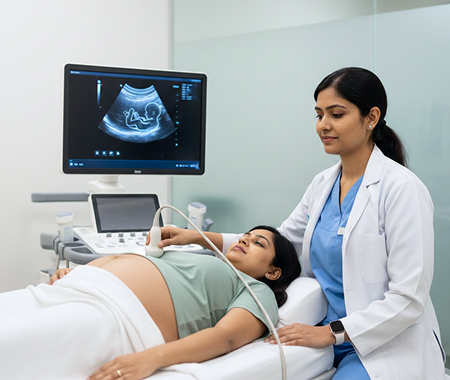
- You will lie comfortably on an examination table
- A clear ultrasound gel is applied to your abdomen to facilitate sound wave transmission
- The sonographer or radiologist moves the ultrasound transducer over your abdomen
- Images are captured, and measurements are recorded
- The examination is conducted systematically to evaluate all fetal structures
Duration: The scan typically takes 30 to 60 minutes, depending on fetal position and image clarity. If the baby is not in an optimal position, you may be asked to walk briefly or consume a light snack to encourage movement.
Understanding TIFFA Scan Results
After the examination, the doctor reviews all images and measurements to prepare a structured report.
Normal Results: When findings are normal, it indicates that fetal development appears appropriate for gestational age. All major organs and structures are developing as expected.
Abnormal Findings: If an abnormality or area of concern is detected:
- The findings will be discussed with you in detail
- Further diagnostic tests may be recommended (such as amniocentesis, genetic testing, or fetal MRI)
- Follow-up scans may be scheduled
- Referral to a fetal medicine specialist or perinatologist may be advised
- Counseling and support will be provided
The TIFFA scan report includes:
- Fetal growth parameters and measurements
- Detailed organ and structure findings
- Placental position and characteristics
- Amniotic fluid level assessment
- Any identified abnormalities or concerns
Important Considerations
Detection Limitations: While the TIFFA scan can detect many major structural abnormalities, it is not 100% accurate. Some minor conditions, such as small heart defects, finger or toe variations, and certain late-onset abnormalities, may not be visible during the scan. Factors such as maternal obesity, fetal position, and amniotic fluid levels can affect image quality.
Chromosomal Abnormalities: The TIFFA scan detects structural abnormalities and can identify soft markers of chromosomal conditions, but it does not definitively exclude chromosomal or genetic abnormalities. Additional genetic testing may be required if concerns are identified.
Safety: Multiple scientific studies confirm that ultrasound examinations are safe during pregnancy. The TIFFA scan uses sound waves rather than radiation, posing minimal risk to mother and baby.
Next Steps After the Scan
The TIFFA scan provides essential information that supports informed decision-making throughout pregnancy. If abnormalities are detected, healthcare teams work closely with families to:
- Explain findings and their implications
- Discuss available options and interventions
- Plan appropriate prenatal care and delivery management
- Provide psychological support and counseling
- Connect families with specialist care when needed
In many cases, minor abnormalities resolve on their own or can be treated after birth. For more significant concerns, early detection allows medical teams to prepare comprehensive care plans for both mother and baby.
Frequently Asked Questions (FAQs)
1. What is the ideal time to get a TIFFA scan? The optimal time for a TIFFA scan is between 18 and 22 weeks of pregnancy, with 19 to 20 weeks being ideal. At this stage, the fetus is large enough for detailed examination, and there is sufficient amniotic fluid for clear visualization. After 24 to 25 weeks, some structures may become difficult to assess due to fetal size and position.
2. Is the TIFFA scan safe for my baby? Yes, the TIFFA scan is completely safe. It uses ultrasound technology (sound waves) rather than radiation, making it safe for both mother and baby. Extensive research confirms that ultrasound examinations pose no harm to the fetus, embryo, or pregnant woman, even when performed multiple times during pregnancy.
3. How long does the TIFFA scan take? The scan typically takes 20 to 45 minutes. However, the duration may vary depending on the baby's position, image clarity, and whether detailed views of all structures can be obtained. If the fetus is not in an optimal position, the sonographer may ask you to walk briefly or have a light snack to encourage fetal movement.
4. Can the TIFFA scan detect all birth defects? The TIFFA scan is approximately 90% accurate in detecting structural abnormalities. However, it cannot detect all birth defects. Some minor conditions, such as small ventricular septal defects (holes in the heart), cleft palate, finger and toe abnormalities, and certain late-onset conditions affecting the brain, intestines, or kidneys, may not be visible during the scan.
Who should take this test
The Anomaly Scan (TIFFA) is a detailed mid-pregnancy ultrasound of the baby's development. It is meant for:
- Pregnant women at the stage of pregnancy their doctor advises, usually between 18 and 22 weeks
- Women with a high-risk pregnancy
- Women with diabetes or other conditions during pregnancy
- Women with a history of pregnancy complications
- Anyone whose doctor has recommended detailed fetal assessment
Anomaly Scan in Warangal
Worried about your Anomaly Scan scan? Tapadia Diagnostic Centre in Warangal offers AERB-licensed Anomaly Scan. Anomaly scan, 20-week scan, Level 2 ultrasound is commonly prescribed for High-risk pregnancy, history of complications, diabetes and suitable for 18-40 Women, Family. Pay at the centre with no advance payment.
Frequently asked questions
Related Scans in Warangal




Centers You Can Choose To Visit
Vijayawada
- H.no 29-27-22, Suryanarayana street, suryaraopet vijayawada-520002
- Services: Lab
- Branch Incharge: Mr. Akhil : +91 6300387321
Get Direction
KPHB COLONY
- MIG H1, Plot No 273, above Visakhapatnam Coop Bank, Kukatpally Housing Board Colony, K P H B Phase 1, Kukatpally, Hyderabad, Telangana 500072
- Richards-9866362080
- Services - Lab, Digital X-Ray. ECG
Get Direction
Tapadia Diagnostic Center Bengaluru
- Sahakarnagar Main Rd, G Block, Sahakar Nagar, Byatarayanapura, Bengaluru, Karnataka 560092
- All facilities Available
- Branch Incharge: Mohammad Sarfaraz :+91 79896 92437
Get Direction
TAPADIA DIAGNOSTIC CENTRE (Main Branch)
- Main Branch
- 1-7-1072/A, RTC X Roads, Opp Saptagiri Theatre, Hyderabad, Telangana, India 500020.
- All facilities Available
- Give call at -8305555999
- Alternate Number -9390110098
Get Direction
SECUNDERABAD
- St. Thomas Spg Church Telugu Pastorate, near Sitara Hotel, Complex, Palika Bazar, Monda Market, Shivaji Nagar, Secunderabad, Telangana 500003
- Services: Lab, ECG
- Ravi-9100577378
Get Direction
Chhatrapati Sambhajinagar (Aurangabad)
- Bansilal Nagar, Station Road, Chhatrapati Sambhajinagar (Aurangabad).
- Services: MRI, CT Scan, Ultrasound, Lab, X Ray, ECG
- Amar Mundada: 94055 85858
Get Direction
Anomaly Scan in Warangal
Rated 4.6 on Google From 6,477 patient reviews across our Hyderabad centres.
Every report, kept for you Past reports stay in your account and can be downloaded again.
NABL accredited Every result reviewed by a qualified pathologist before it reaches you.
Four decades of practice A family-run diagnostic centre, trusted by doctors and households since 1989
Medically Reviewed by Qualified Biochemists

Anomaly Scan in Other Cities
MRI Knee - Both Joints in WarangalMRI Knee - Left Joint in WarangalMRI Knee - Right Joint in WarangalMRI C Spine in WarangalMRI LS Spine in WarangalMRI Brain in WarangalPulmonary Function Test in WarangalMRI - Brain/Spine/Knee in WarangalElectrocardiogram (ECG) in WarangalMammogram in WarangalChest X-ray in WarangalAbdominal Ultrasound in Warangal2D Echo in WarangalExercise Stress Test in WarangalPrenatal Ultrasound in WarangalX-Ray KUB in WarangalChest CT Scan in WarangalEEG in WarangalCT Head in WarangalHRCT Chest in WarangalAnomaly Scan in Warangal

 Made with Levo